More Than Arts and Crafts
The phrase project-based learning gets tossed around so loosely in education circles that it has nearly lost its meaning. A classroom where children glue cotton balls onto a poster of a sheep and call it a project about farm animals is not doing project-based learning. A classroom where children spend a week building a diorama of the solar system after reading a chapter about planets is barely scratching the surface. Real project-based learning is something fundamentally different, and when it is done well, it is one of the most powerful educational approaches available for children of any age.
At Acton Academy College Station, we call our project-based work quests, and they are the centerpiece of the afternoon at every studio level. A quest is a multi-week challenge organized around a driving question that does not have a single correct answer. It requires research, collaboration, iteration, and public presentation. It integrates multiple subject areas not because a teacher mapped them onto a lesson plan but because real problems do not respect subject-area boundaries. And it ends with an authentic audience judging the quality of the work, which creates stakes that no graded worksheet can replicate.
What follows are three real examples from our studios. Each one illustrates what project-based learning looks like when the work is genuine, the audience is real, and the learners are trusted to lead.
Example One: The Community Cookbook Quest
A group of Discovery Studio learners, ages eight through eleven, spent six weeks creating a community cookbook. The driving question was: How do the foods we eat tell the story of where we come from?
The quest began with interviews. Each learner interviewed a family member or community elder about a recipe that held personal significance. They asked about the history of the dish, the cultural context, the memories associated with it, and the specific techniques involved. These interviews required preparation, active listening, and the ability to ask follow-up questions when answers were vague, all skills that are difficult to teach in isolation but emerge naturally when the context demands them.
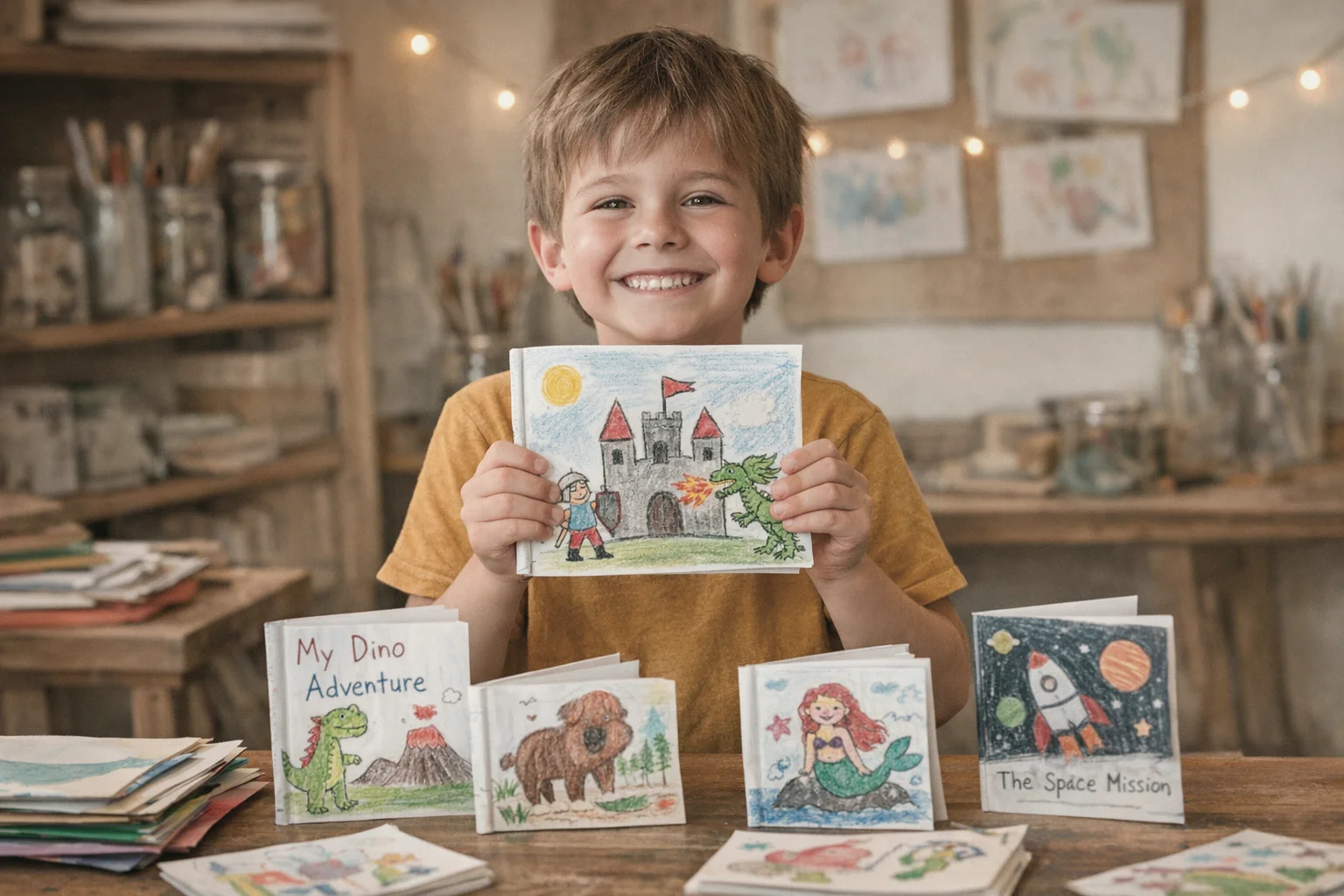
From the interviews, learners drafted recipe pages that included the recipe itself, the story behind it, and an original illustration or photograph. The writing went through multiple rounds of peer editing. Classmates offered feedback on clarity, grammar, and narrative structure. A learner whose first draft read like a list of ingredients transformed it into a vivid story about her grandmother’s kitchen after two rounds of revision and the honest critique of her running partner.
The math emerged organically. Learners calculated ingredient costs, converted measurements for scaled recipes, and managed a budget for printing the final cookbook. The social studies connection was built into the premise: every recipe carried history, geography, and cultural identity.
At the exhibition, families received printed copies of the cookbook and listened as learners presented the stories behind their chosen recipes. Several parents described it as one of the most meaningful school events they had ever attended. The cookbook was not a classroom exercise. It was a real artifact that families took home and used.
Example Two: The Bridge Engineering Challenge
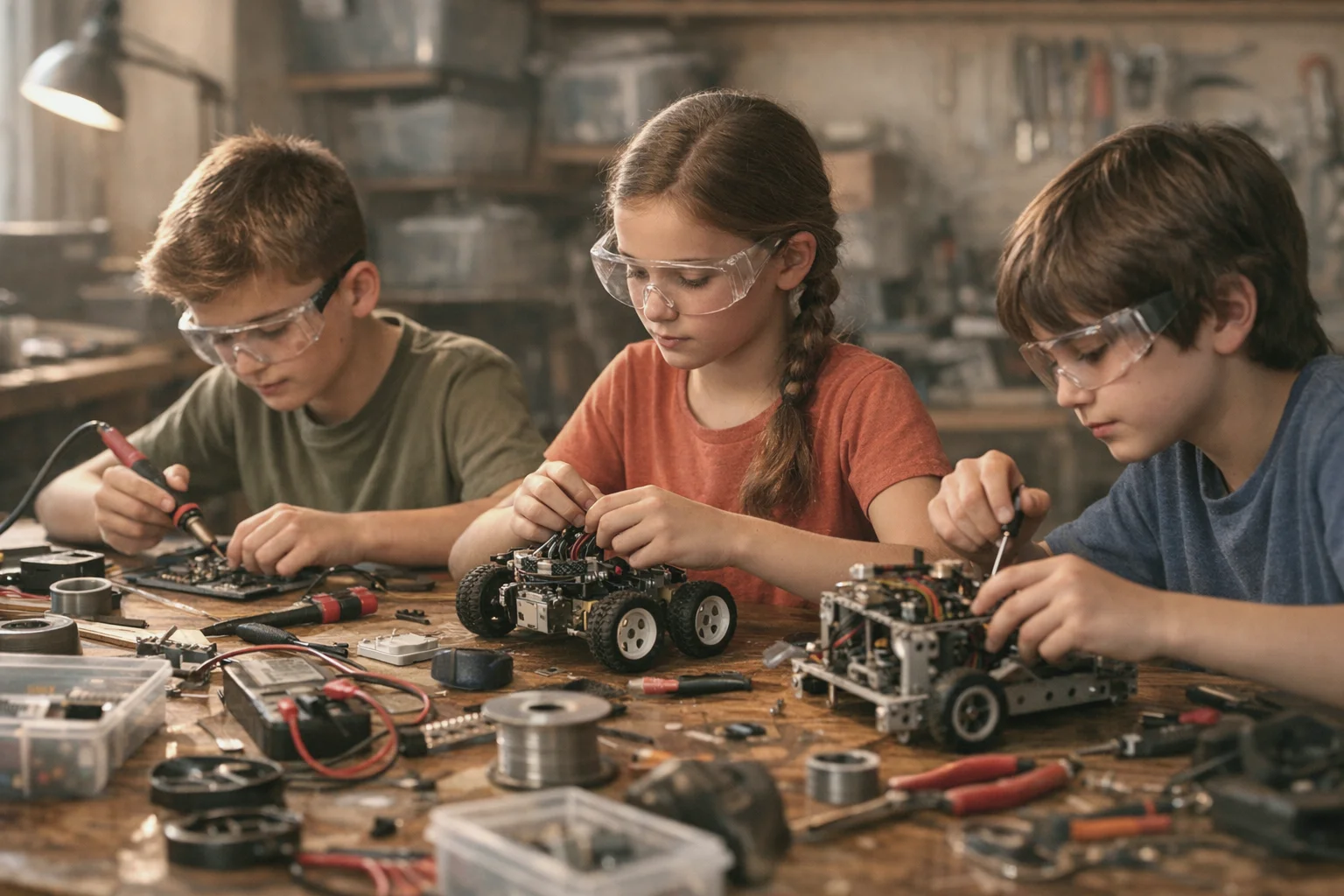
An Adventure Studio group of eleven-to-fourteen-year-olds tackled a classic engineering quest with a twist. The driving question was: Can you design a bridge that holds one hundred times its own weight using only balsa wood and glue?
The first phase was research. Learners studied different bridge designs, truss structures, and the physics of load distribution. They read about real engineering failures and what caused them. This was not a textbook exercise. It was research driven by a concrete problem: their bridge had to work, and understanding why bridges fail was essential to building one that would not.
The second phase was prototyping. Each team of three built a series of small-scale models, testing them to failure and recording the results. The studio was covered in broken balsa wood and hot glue, and the energy in the room was electric. When a bridge collapsed under ten pounds instead of the target weight, the team did not receive a bad grade. They received data. They analyzed what went wrong, redesigned, and built again.
The final phase was the exhibition test. Each team presented their bridge to an audience that included families and a structural engineer from College Station who volunteered his time. He asked technical questions about design choices, load paths, and material properties. Then each bridge was placed on a testing rig and loaded with weights until it either held the target or broke. The cheering, the groaning, and the genuine learning embedded in those moments were unforgettable.
The science in this quest was rigorous: physics, material science, and structural engineering. The math was real: measurements, ratios, weight calculations, and data analysis. The collaboration was intense: teams had to divide labor, manage disagreements, and integrate different ideas into a single design. And the stakes were authentic: the bridge would either hold or it would not, and everyone would be watching.
Example Three: The Small Business Sprint
A mixed group of Discovery and Adventure learners spent eight weeks launching real micro-businesses. The driving question was: Can you identify a real need, create a real product or service, and earn real revenue in eight weeks?
Learners brainstormed business ideas, conducted market research by surveying families and community members, and developed business plans that included cost analysis, pricing strategy, and marketing plans. One team created custom greeting cards and sold them at a local market. Another offered a pet-sitting service. A third designed and sold handmade bookmarks with original artwork.
The learning was relentless and multidisciplinary. Writing showed up in marketing copy, customer emails, and business plans. Math showed up in pricing, profit margins, and accounting. Art showed up in product design and branding. Social skills showed up in customer interactions, team negotiations, and the difficult conversations that arise when a business partner is not pulling their weight.
At the exhibition, each team presented their results: revenue earned, lessons learned, mistakes made, and what they would do differently next time. The honesty was striking. One team admitted they had priced their product too low and lost money on materials. Another described a partnership disagreement that nearly derailed the project and the conversation that saved it. These are not the kinds of reflections you get from a worksheet. They are the kinds of reflections you get from real experience.
Why PBL Works: The Transfer Principle
The reason project-based learning produces deeper understanding than traditional instruction is a principle cognitive scientists call transfer. Knowledge learned in the context of solving a real problem transfers more readily to new situations than knowledge learned in isolation. A child who learns about ratios by calculating ingredient conversions for a cookbook is more likely to recognize and apply ratios in a new context than a child who learned ratios from a textbook exercise about trains leaving stations.
This transfer effect is amplified when the work involves multiple subjects simultaneously. Real problems do not arrive labeled math problem or reading comprehension exercise. They arrive as messy, complex situations that require drawing on knowledge from multiple domains. Quests train learners to approach problems the way they actually exist in the world: as wholes, not as artificially separated parts.
The social dimension of project-based learning further enhances transfer. Working in a team, presenting to an audience, receiving and incorporating feedback, these experiences develop communication, collaboration, and adaptability skills that are difficult to build through individual seatwork. A learner who has spent years doing quests arrives at adulthood with a toolkit of practical skills that many people spend decades assembling on the job.
The Line Between PBL and Fun Activities
Not every hands-on activity is project-based learning, and the distinction matters. A fun activity is enjoyable but does not necessarily build transferable skills or require sustained effort. A project-based learning experience is often enjoyable, but enjoyment is a byproduct, not the goal. The goal is deep learning through authentic challenge.
The markers of genuine PBL include a driving question that invites multiple valid approaches, a timeline measured in weeks rather than class periods, student ownership of the process, integration of multiple disciplines, iteration based on feedback, and a public audience for the final product. When any of these elements is missing, the experience may be engaging, but it is not project-based learning in the way that produces lasting growth.
At Acton Academy College Station, every quest is designed against these markers. Guides invest significant time in crafting quest frameworks that are structured enough to guide without dictating and open enough to allow genuine learner ownership. The result is an afternoon experience that families in College Station, Texas describe as the thing that made their child fall in love with learning again.
If you want to see project-based learning in action, the best way is to attend an exhibition where learners present their quest work to the public. The quality of the work, and the pride with which it is presented, will show you what children are capable of when the work is real.