What the Business Fair Is and Why We Do It
Every year at Acton Academy College Station, our learners participate in a Children’s Business Fair, a real marketplace where young entrepreneurs create products or services, set up booths, and sell to actual customers. This is not a simulation. It is not a worksheet about how businesses work. It is the real thing, complete with real money changing hands, real customers making purchasing decisions, and real lessons that only come from putting something you made into the world and watching people respond to it.
The Business Fair is one of the most anticipated events on our calendar, and for good reason. It is the culmination of weeks of entrepreneurship quest work during which learners move through the full arc of building a business: identifying a need, designing a product, creating a business plan, producing inventory, setting prices, marketing, selling, and reflecting on the results. The fair itself is a single day, but the learning stretches across months.
We do this because we believe that children are far more capable than most educational systems give them credit for. A nine-year-old can understand profit margins. A seven-year-old can conduct market research. A twelve-year-old can create a brand identity that actually resonates with customers. When we give learners the opportunity to do these things for real, rather than in hypothetical exercises, the engagement and learning that result are extraordinary.
The Business Fair is also a community event. Families, neighbors, and friends come to browse, buy, and cheer on young entrepreneurs. It is a celebration of initiative, creativity, and the willingness to try something hard. And it is a vivid demonstration of what learner-driven education looks like when it comes to life.
Preparation: From Idea to Inventory
The journey to the Business Fair begins weeks before the event with the ideation phase. Learners brainstorm problems they could solve or products they could create. Guides encourage them to think about their interests, their skills, and the needs of their potential customers. The best business ideas tend to emerge at the intersection of what a learner loves doing and what other people actually want.
Once an idea takes shape, learners develop a business plan. This is not a fill-in-the-blank template. It is a working document that includes a description of the product, an analysis of the target customer, pricing strategy, production plan, and financial projections. The rigor of the business plan varies by studio level. A Spark learner might draw pictures of their product and decide on a price. A Discovery learner writes a multi-page plan with budgets and market research data. An Adventure learner produces something that could genuinely be presented to an investor.
Market research is a critical step that learners often underestimate. We encourage them to survey potential customers before committing to a product. What would you pay for this? Would you buy this at a fair? What would make it better? These conversations teach learners that their assumptions about what people want are often wrong, and that the fastest way to improve an idea is to ask the people you hope to serve.
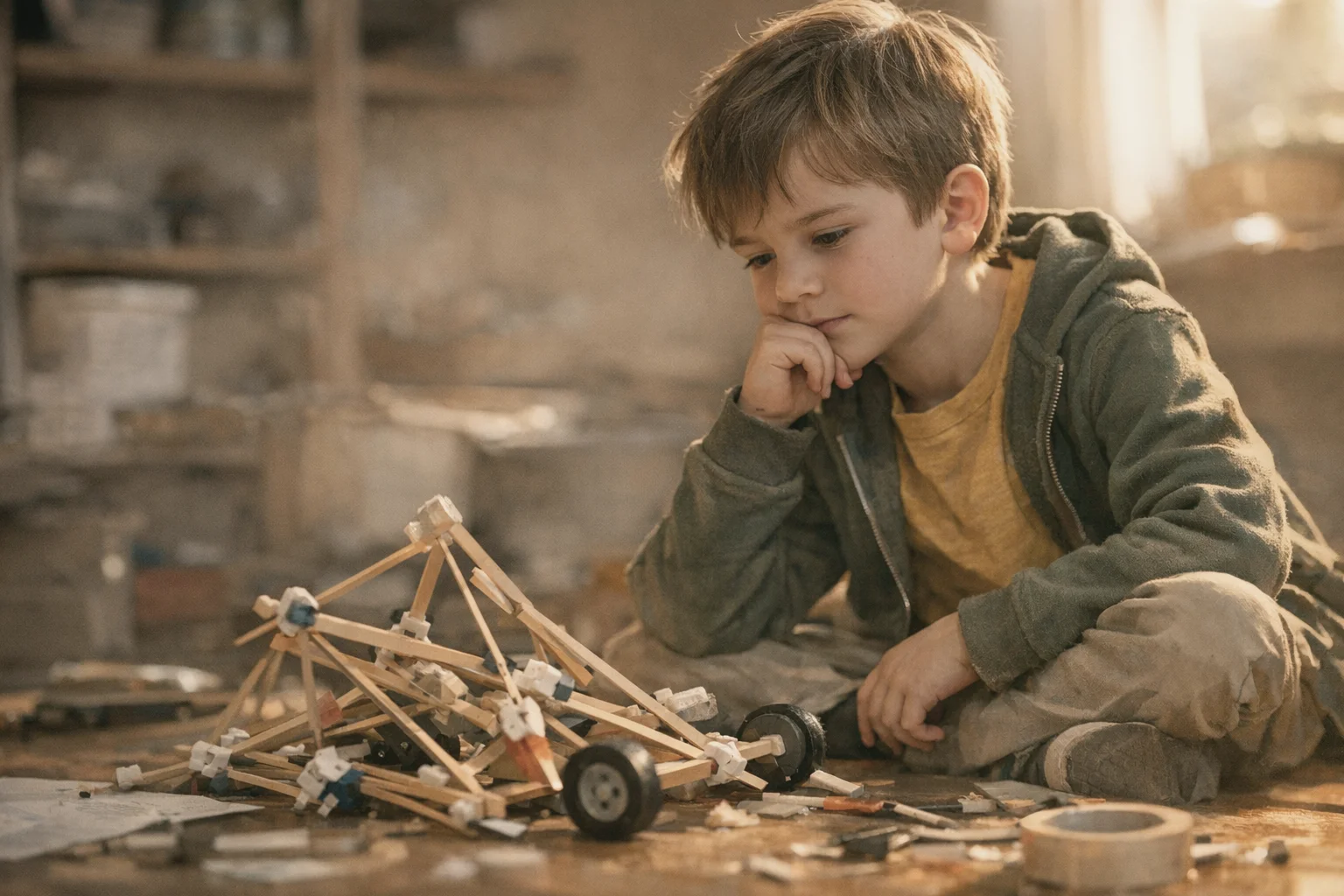
Production is where things get real and often messy. A learner planning to sell handmade candles discovers that melting wax takes longer than expected. A learner creating custom bookmarks runs out of materials and has to recalculate their budget. A learner designing a game realizes that the rules need to be simplified so customers can understand them quickly. Every production challenge is a learning opportunity, and learners who work through these challenges develop problem-solving skills that no classroom exercise could replicate.
The Parent’s Role: Support Without Rescue
This is the section every parent needs to read carefully, because the Business Fair is one of the most tempting moments to take over, and one of the most important moments to resist that temptation.
Your child’s business is their business. Not yours. This means the product might not be perfect. The booth might not be Instagram-worthy. The pricing might not maximize revenue. And that is exactly how it should be. The purpose of the Business Fair is not to produce professional-quality results. It is to give learners the experience of owning something from start to finish, including the imperfections.
Here is what helpful support looks like. You can help your child brainstorm by asking open-ended questions: What problem does this solve? Who would buy this? What materials do you need? You can help them source materials by driving to the store or helping them order supplies online. You can help them practice their sales pitch by playing the role of a customer who asks tough questions. You can help them think through logistics by asking when they plan to produce their inventory and how they will transport it to the fair.
Here is what taking over looks like. You design the product. You create the logo. You set the price. You build the booth. You stand behind the table on fair day explaining the product to customers while your child watches. We see this happen, and we understand the impulse behind it. You want your child to succeed. You want them to feel proud. But the deepest pride comes from knowing that what they created is truly theirs, imperfections and all.
When your child’s first batch fails, when their sign is crooked, when their price is too high and they have to adjust on the fly, those are not disasters. Those are the moments where the real learning happens. Your job is to be present, encouraging, and available without becoming the CEO of their lemonade stand.
Fair Day: What to Expect
The Business Fair typically takes place on a Saturday morning, transforming the Acton Academy College Station campus into a bustling marketplace. Learners arrive early to set up their booths, arrange their inventory, and make last-minute preparations. The nervous energy is palpable and wonderful.
Booths open to the public mid-morning, and customers begin to browse. Some learners are natural salespeople who engage every passerby with enthusiasm. Others are quieter and need a few minutes to warm up. Both approaches are fine. Part of the learning is discovering your own style of interacting with customers and figuring out what works for you.
Sales ebb and flow throughout the morning. Some products sell quickly. Others move slowly. Learners who are paying attention adjust in real time: changing their pitch, offering samples, bundling products, or repositioning their displays. This adaptive thinking is one of the most valuable skills the fair develops. The plan you started with is just a starting point. What matters is how you respond to reality.
By early afternoon, the fair wraps up. Some learners have sold everything. Others have leftover inventory. Both outcomes provide rich material for reflection. The learner who sold out gets to celebrate and analyze what worked. The learner who did not sell everything gets to investigate why and think about what they would change.
What Children Learn Regardless of Sales
We want to be very clear about this: the Business Fair is a success for every learner who participates, regardless of how much money they make. The revenue is exciting, but it is the least important outcome. Here is what every participant walks away with.
They learn that ideas have consequences. When you turn an idea into a product and offer it to the world, you discover whether your thinking was sound. That feedback loop is more honest and more instructive than any grade on a test.
They learn to handle uncertainty. No one knows in advance whether their product will sell. Sitting with that uncertainty, showing up anyway, and doing your best in the face of it is a form of courage that will serve learners in every arena of their lives.
They learn to communicate. Explaining your product to a stranger requires clarity, confidence, and the ability to read your audience. These communication skills transfer directly to presentations, interviews, negotiations, and everyday conversations.
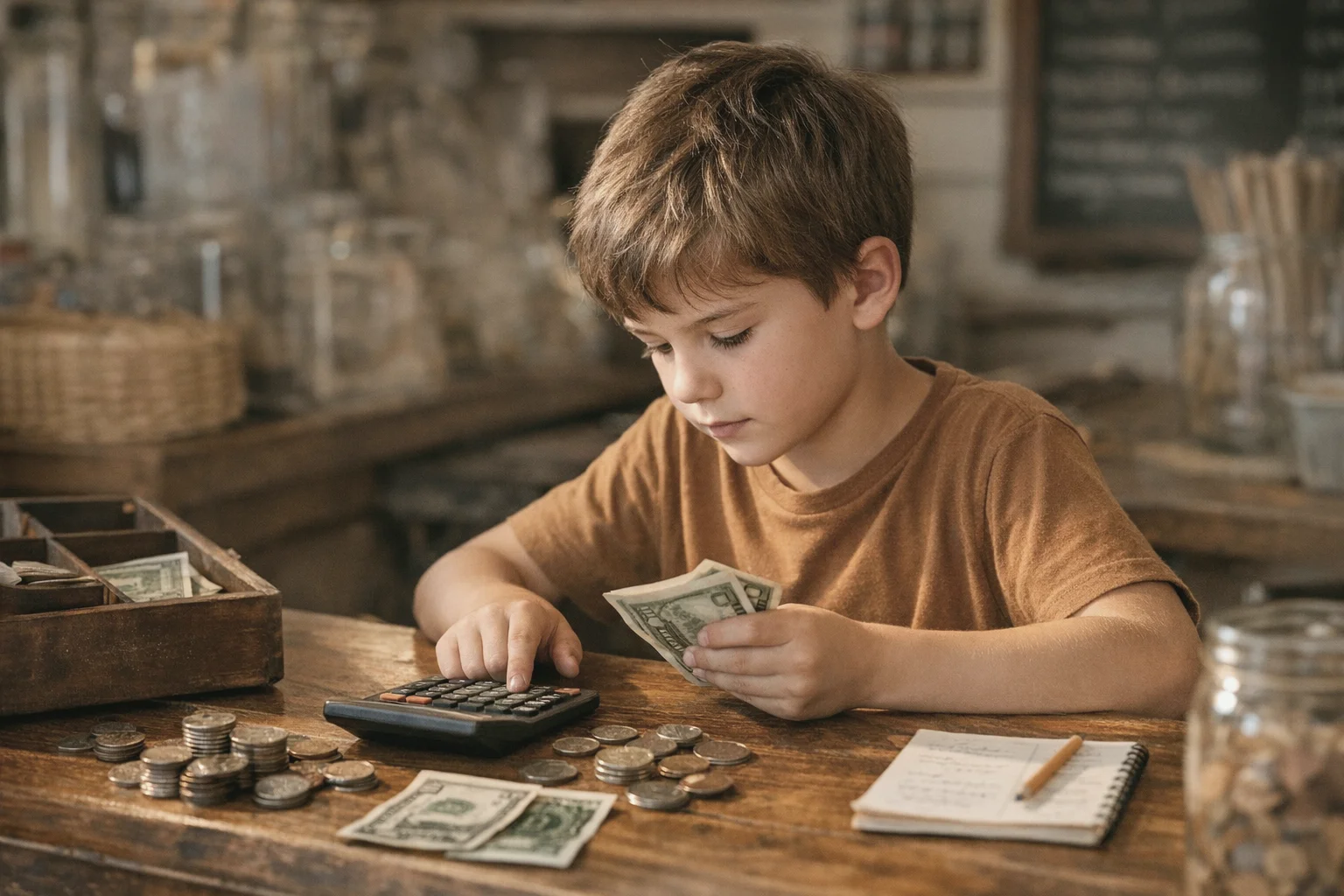
They learn about money. Calculating costs, setting prices, making change, and tracking revenue give learners hands-on experience with financial concepts that most adults find intimidating.
They learn about themselves. Every learner discovers something about their own strengths and preferences during the fair. Some discover they love the creative process of designing a product. Others discover they thrive in the face-to-face interaction of selling. Others discover they are natural organizers who keep the operation running smoothly. Self-knowledge is perhaps the most valuable outcome of all.
After the Fair: Reflection and Next Steps
At Acton Academy College Station, the Business Fair does not end when the booths come down. The following week, learners complete a structured reflection process. They review their financial results, analyze what worked and what did not, solicit feedback from customers and peers, and write about what they would do differently next time.
This reflection is where the learning solidifies. Without it, the fair is just a fun day. With it, the fair becomes a formative experience that shapes how learners approach challenges and opportunities going forward.
Some learners decide to continue developing their business beyond the fair. They refine their product, build an online presence, or seek out additional selling opportunities. Others take the skills they developed and apply them to entirely different pursuits. Both outcomes are exactly what we hope for. The fair is not about creating lifelong entrepreneurs. It is about creating lifelong learners who know how to turn ideas into action.
For more on why entrepreneurship education matters for children regardless of their future career path, we have explored that topic in depth.
Join Us at the Next Fair
Our Children’s Business Fair is open to the community, and we would love for you to attend. Come browse the booths, support young entrepreneurs, and see firsthand what learners are capable of when given real responsibility and real freedom. If you are considering Acton Academy College Station for your family, the Business Fair is one of the best ways to experience our community and our philosophy in action. Check our events page for the next date and come be part of it.